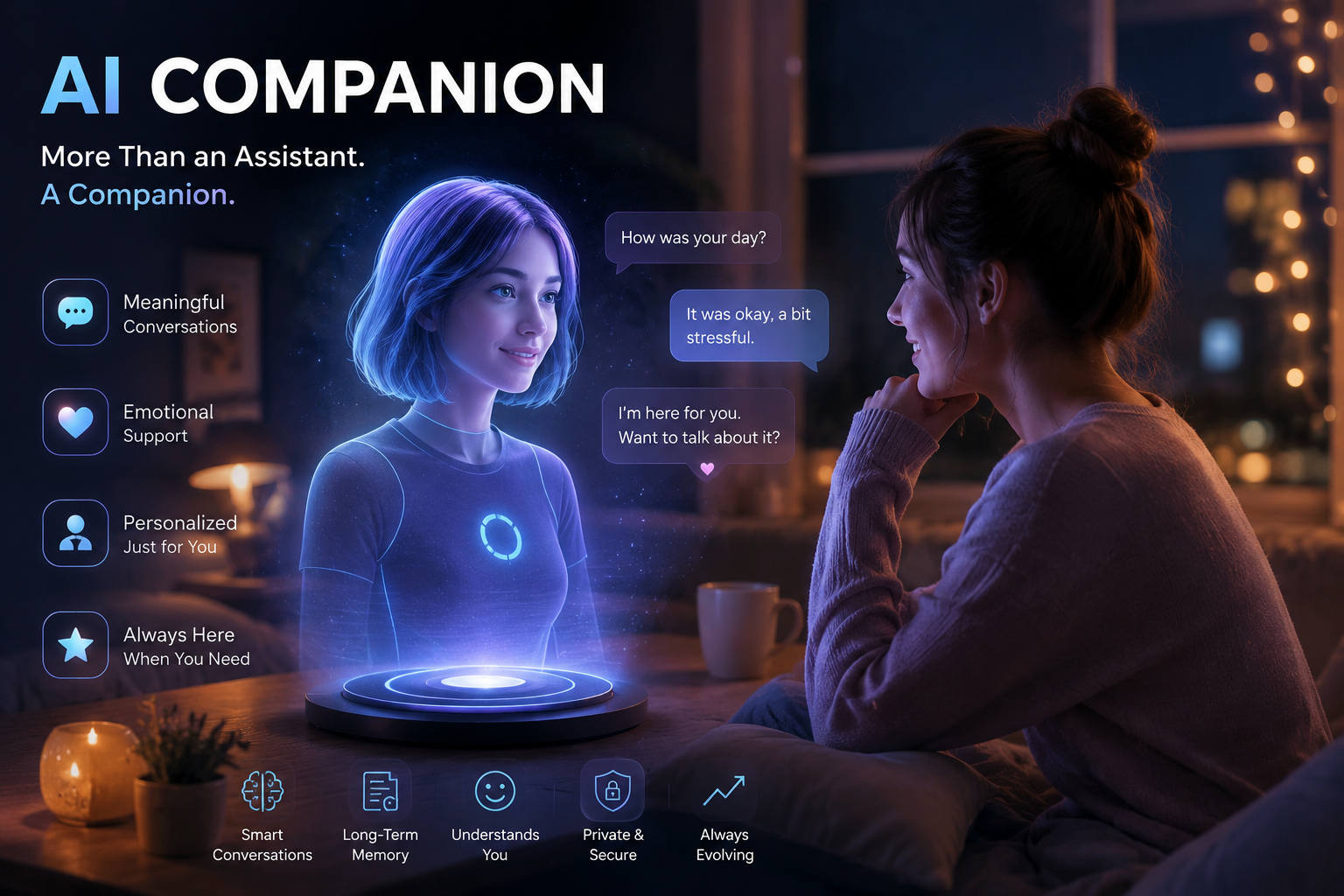
The AI companion market is moving beyond the early stage where users simply tested a chatbot out of curiosity. In 2026, engagement is becoming a more important measure of success than downloads alone. People are spending time with AI systems for conversation, entertainment, creativity, personalization, roleplay, and ongoing digital interaction. This change is influencing how AI products are designed, monetized, and improved.
What makes the current shift particularly notable is that users increasingly expect continuity. A conversation from yesterday is no longer expected to disappear when a new session begins. Users want systems that remember preferences, maintain context, respond consistently, and gradually adapt to their interaction patterns. As a result, AI companion products are being developed around longer relationships rather than isolated prompts.
User Engagement Is Moving From Short Sessions to Ongoing Interaction
Early conversational AI products often focused on a simple question-and-answer format. A user entered a prompt, received a response, and then left. AI companion technology is creating a different pattern.
Many users now return to continue earlier conversations. They may develop recurring topics, establish preferred interaction styles, or spend time shaping a particular AI personality. Consequently, metrics such as return frequency, session duration, messages per user, and retention can reveal more about product performance than initial traffic alone.
Under the second major engagement pattern, interest in an AI girlfriend can also reflect a wider demand for personalized conversational experiences where users value personality consistency, adaptive responses, and interactions that feel less repetitive over time.
The Technology Behind Better Engagement Is Becoming More Sophisticated
The quality of AI engagement depends heavily on the technology operating behind the interface. Earlier chatbots were often limited by short context windows, predictable response patterns, and minimal personalization. Modern systems are gradually moving toward more advanced architectures.
Several technical developments are contributing to this change.
Persistent Memory
Memory systems allow AI products to retain selected information across interactions. Instead of treating every session as completely new, the platform may remember preferences, conversation topics, or user-defined details.
Of course, memory must be managed carefully. Users need appropriate controls over what information is retained and how it is used. Despite the technical challenges, memory can significantly improve continuity when implemented effectively.
Multimodal Interaction
Text remains important, but AI interaction is no longer limited to written messages. Voice, images, avatars, and other forms of media are becoming part of companion experiences.
This creates additional engagement opportunities. A user who prefers speaking may interact differently from someone who primarily types. Likewise, visual character customization can give users another way to personalize their experience.
Faster AI Responses
Response speed matters more than it may initially appear. Long delays can interrupt the natural flow of a conversation. Lower latency can make an interaction feel smoother, especially during voice-based communication.
As a result, model optimization and infrastructure decisions are becoming directly connected to user engagement.
More Advanced Personalization
Personalization is gradually shifting from basic name recognition toward more complex behavioral adaptation. AI systems can potentially adjust tone, recommendations, conversation starters, and responses based on user preferences and previous interactions.
Xchar AI represents part of this product direction, where personalization can help create a more consistent experience for users who return repeatedly.
Chart: Key Factors Influencing AI Companion Engagement
The following chart presents a simple view of how major technology and product elements can influence user engagement. The percentages are illustrative engagement priority indicators based on commonly reported AI product trends, rather than results from one single survey.
Clearly, technology alone does not guarantee engagement. A highly advanced model may still produce poor retention if the product experience is confusing or repetitive. Not only must the AI generate useful responses, but the entire interaction flow must also make it easy for users to return.
Product Design Is Becoming Closely Connected to Retention
The evolution of the AI companion market is also changing product design priorities. Earlier AI products could place most attention on the chat window itself. That is no longer enough for many platforms.
Onboarding can influence whether users understand what makes a companion different. Character creation can affect the initial sense of personalization. Suggested conversation prompts can reduce the difficulty of starting an interaction. Notifications, memory summaries, and new content can also encourage users to return.
However, retention should not depend on excessive prompts or interruptions. A product that repeatedly demands attention may create the opposite effect. Engagement design works better when users see clear value in returning.
New User Segments Are Expanding the Market
The AI companion market is no longer defined by one narrow user group. Different people approach these products with different expectations.
Some users are interested in casual conversation. Others want entertainment, interactive characters, creative scenarios, or personalized digital experiences. Meanwhile, creators and technology enthusiasts may use companion systems to test how AI personalities behave over long interactions.
This broader usage is contributing to market diversification.
There is also growing interest in systems that give users greater creative freedom. Searches around an AI unrestricted generator point to demand for tools where users can shape interactions, prompts, characters, and generated experiences with fewer present limitations, while responsible platform policies and technical safeguards remain important considerations.
Monetization Is Shifting Toward Long-Term User Value
As engagement patterns change, monetization strategies are changing as well. One-time transactions may be useful for some products, but recurring interaction creates opportunities for subscription-based models.
Premium plans may focus on higher usage limits, advanced personalization, enhanced memory, faster access, additional character options, voice capabilities, or other product improvements. However, a subscription can only remain attractive when users continue receiving meaningful value.
This places greater pressure on engagement quality.
A platform cannot rely entirely on attracting new users if existing users leave quickly. Consequently, retention and lifetime value are becoming more closely connected. A smaller group of highly engaged users may sometimes create more sustainable growth than a very large group of users who only try the product once.
This is one reason product analytics is becoming increasingly important. Teams can monitor:
- Daily and monthly active users
- Session frequency
- Average conversation length
- Return rates
- Feature adoption
- Subscription conversion
- Churn patterns
- Engagement differences between user groups
These data points can help identify where users lose interest and which experiences encourage them to return.
Global Expansion Will Require More Than Translation
The market is also becoming increasingly international. AI companion products can potentially reach users across many countries, but expanding globally involves more than converting English text into another language.
Language affects the product interface, content, onboarding, search optimization, and communication style. Some languages require more interface space. Right-to-left languages require different layout support. Cultural preferences may also influence how users respond to character design, humor, conversation tone, and personalization.
As a result, companies planning international growth need a localization strategy that considers both technology and user experience.
AI translation can help scale large content libraries. However, important product pages and conversion-focused content often benefit from native review and local SEO research. In the same way, the interface should be tested in each target language rather than assuming that the original English design will work everywhere.
Privacy and User Control Will Influence Future Engagement
As AI companions become more personalized, questions about data and user control become increasingly important.
Persistent memory may improve engagement, but users need transparency about what the system remembers. Controls for editing, removing, or managing saved information can become an important part of product trust.
Likewise, companies need to think carefully about how personalization data is stored and processed. A product may offer advanced experiences, but unclear privacy practices can damage user confidence.
Consequently, future competition may involve not only model quality and features but also the quality of user controls.
The strongest experiences may be those where personalization and transparency work together. Users can receive relevant interactions while still having meaningful control over their information.
AI Companions Are Becoming More Adaptive Products
The market is showing a move away from static chatbot experiences. AI companions are increasingly being designed as adaptive products that respond differently as user behavior develops.
Initially, the system may focus on introducing its capabilities. Subsequently, it may learn preferred conversation styles and help create more relevant interactions. Eventually, advanced personalization can make returning users feel that the product has greater continuity.
However, this direction also creates technical challenges.
AI responses must remain reliable. Memory systems need appropriate controls. Personalization should not become repetitive or intrusive. Product teams also need to prevent engagement mechanisms from creating poor user experiences.
Conclusion
The AI companion market is showing major changes in how digital products measure and build user engagement. Downloads and first-time interactions remain important, but long-term usage is increasingly becoming the stronger indicator of product value.
Personalization, memory, response quality, multimodal interaction, and thoughtful product design are contributing to this shift. In particular, users are beginning to expect more continuity from AI experiences, creating new opportunities for companies that can deliver relevant and consistent interactions.